
By EasyLink · Published
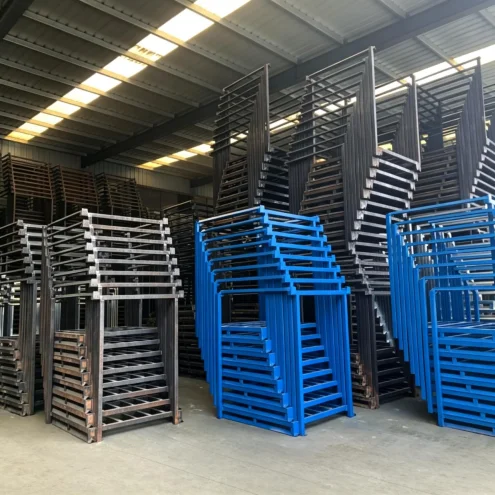
Containers, pallets and racks provide different forms of containment and load support. Compare them against the goods, handling method and storage conditions before selecting a model.
Containment and access
Consider containment first. A container provides sides around the load, while a pallet provides a supporting base. Check whether the goods need a surrounding barrier and whether small parts could pass through a mesh opening. For a steel bin or pallet box, compare the wall construction and the opening needed to place or remove the goods. For a pallet cage, include the pallet dimensions and its interface with the cage.
Support for the load
Next, consider support. Record the footprint, shape and weight of the goods, including where the load contacts the equipment. Rolls, battery assemblies and other shaped goods may need a different support arrangement from boxed goods. When comparing a rack or stillage, explain the support points and the proposed storage arrangement rather than selecting on overall dimensions alone.
Handling throughout the workflow
Check access throughout the workflow. Identify how the goods enter and leave the equipment, how the loaded unit is moved and where it is stored. Door openings, fork entry and usable internal space can matter as much as the outside footprint. For equipment with wheels, include the intended travel route, floor condition and any brake requirements.
Load conditions
Separate the operating conditions. Floor storage, handling and stacking do not impose the same conditions. A listed load figure must be read with its stated conditions; it does not by itself confirm suitability for every arrangement. Ask for the proposed configuration to be checked against your actual application.
Compare the complete specification
Compare the complete proposal. Record usable and external dimensions separately, then compare structure, finish, handling access, quantity and destination. Product pages and catalogues help identify reference models. The final selection should use the confirmed equipment specification, not a photograph or category name alone.