By EasyLink · Published
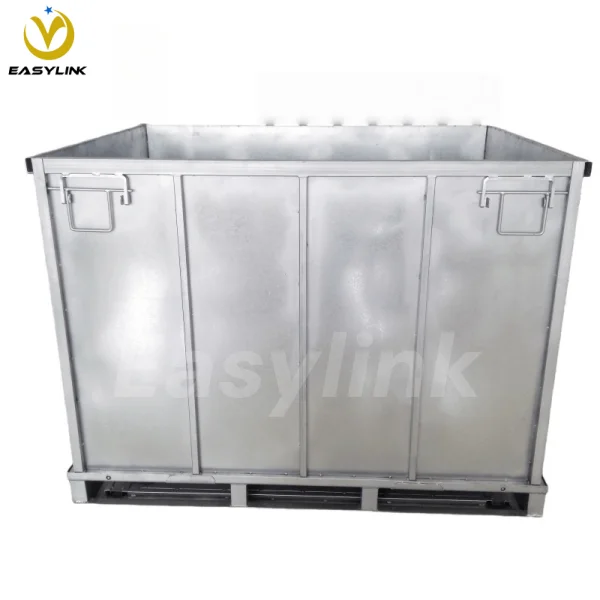
Steel bin selection starts with the goods dimensions, load and handling method. Compare standard models against these requirements, then identify any changes to the structure or access openings.
Measure the space your goods need
List the size and weight of the parts, including packaging. Compare usable internal dimensions as well as the outside footprint. A partition, liner or support can reduce the available space, so include it in the specification.
Choose how to load and unload
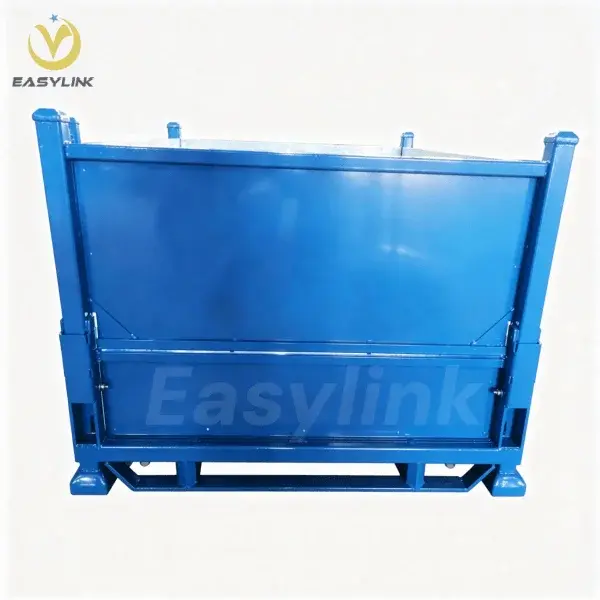
An open top can suit loading from above. A drop panel or side door provides another access point. Consider where the operator stands and how much room the door needs. For small loose parts, check the wall and base construction and any gaps around openings.
Check the full handling cycle
Describe fork entry, movement between workstations and empty returns. If bins will be stacked, ask for the permitted configuration and load conditions for the selected model. The load carried inside one bin does not define how many loaded bins it can support.
Compare fixed and folding structures
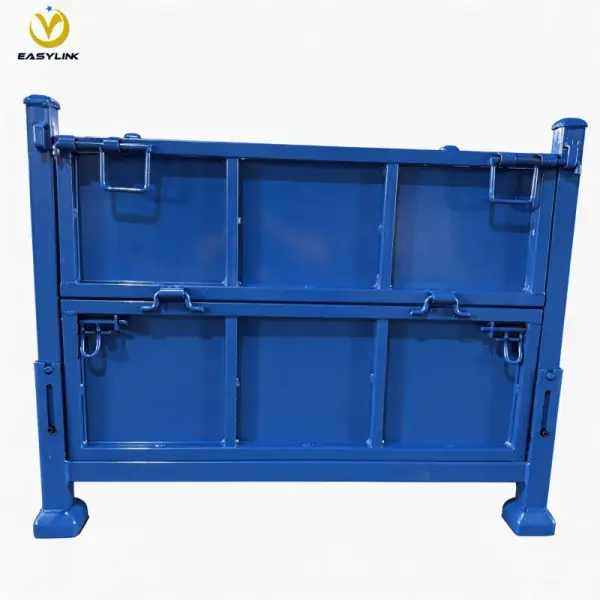
A folding bin can reduce the space occupied during empty returns. Check the folded dimensions and the opening and closing sequence against your workflow. For surface finish, describe moisture, cleaning and indoor or outdoor use instead of choosing by colour alone.
Browse steel pallet boxes and bins. Send the reference model, quantity, goods dimensions and destination when you request a quote.